I’m not convinced there’s any internal use for blockchain. Internal implies under a specific umbrella, some overarching organisation, who can then be the central trusted server that makes blockchain unnecesary.
That said, non-public but open uses, such as tracking dealings between companies in markets with little trust and no single governments (the shipping example in your referenced comment) is indeed the thin slither of a plausible use-case.
Another limitation is that blockchain loses its benefits if anyone tries to design over the complexity of using it directly (using a ui that under the hood uses blockchain is no different to using a ui that talks to a central database, you’re trusting the central ui provider, you need to (at least be able to) build your own interface to realise the benefits of blockchain.
That means blockchain basically will never benefit individuals, it can’t. Sure, you could have multiple compatible uis shared around, but that’s no different security-wise to multiple central banks with an interoperable transfer system.
The only place blockchain has real benefits is when multiple large corporations/governments are interacting and don’t trust eachother/anyone.
See the link in my other replies for some examples of internal uses that still benefit from immutable, distributed ledgers.
Large organizations still have loss and risk from individual bad actors. Operating a central authority that validates every single transaction in a ledger, and validates ledger history and consistency, can be prohibitively complicated. A well designed blockchain implementation can resolve most of these issues.
A great example is a pharma/healthcare company that wants to manage medicine batch and expiration tracking, as well as distribution/patient assignment. With a traditional infrastructure every participant needs to phone home to a central authority. In a blockchain setup, peers can report ledger events one hop up and propagate it through the chain.
That’s a very simple example but I hope it gets my point across

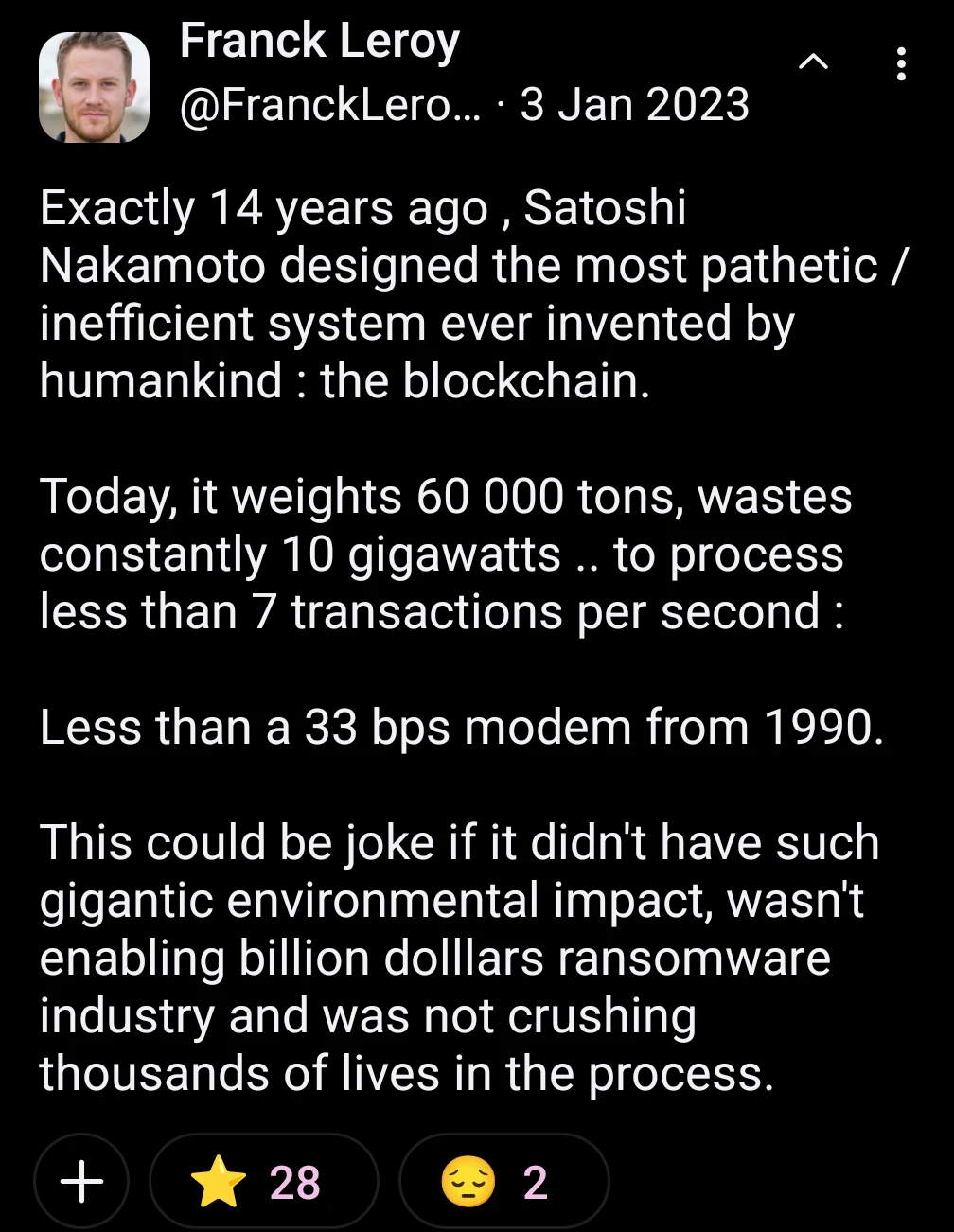
I’m not convinced there’s any internal use for blockchain. Internal implies under a specific umbrella, some overarching organisation, who can then be the central trusted server that makes blockchain unnecesary.
That said, non-public but open uses, such as tracking dealings between companies in markets with little trust and no single governments (the shipping example in your referenced comment) is indeed the thin slither of a plausible use-case.
Another limitation is that blockchain loses its benefits if anyone tries to design over the complexity of using it directly (using a ui that under the hood uses blockchain is no different to using a ui that talks to a central database, you’re trusting the central ui provider, you need to (at least be able to) build your own interface to realise the benefits of blockchain.
That means blockchain basically will never benefit individuals, it can’t. Sure, you could have multiple compatible uis shared around, but that’s no different security-wise to multiple central banks with an interoperable transfer system.
The only place blockchain has real benefits is when multiple large corporations/governments are interacting and don’t trust eachother/anyone.
See the link in my other replies for some examples of internal uses that still benefit from immutable, distributed ledgers.
Large organizations still have loss and risk from individual bad actors. Operating a central authority that validates every single transaction in a ledger, and validates ledger history and consistency, can be prohibitively complicated. A well designed blockchain implementation can resolve most of these issues.
A great example is a pharma/healthcare company that wants to manage medicine batch and expiration tracking, as well as distribution/patient assignment. With a traditional infrastructure every participant needs to phone home to a central authority. In a blockchain setup, peers can report ledger events one hop up and propagate it through the chain.
That’s a very simple example but I hope it gets my point across
Identifying anomalous behavior from bad actors is already a solved problem with databases and governing bodies.
Nobody said it wasn’t? But different models have different benefits and drawbacks?